© Copyright 2026 by
9
November
Aesthetic Clinic Near Me: How to Choose the Right One in Dubai
Searching for an aesthetic clinic near me in Dubai can…
Skin assessment, peels, facials and medical plans for acne at Estelaza Clinic
Looking for acne treatment Dubai residents can rely on? At Estelaza Clinic in Dubai Silicon Oasis, our DHA-licensed doctors assess your skin first, then build a plan for your type of acne. Depending on your skin, this may include chemical peels, HydraFacial, deep cleansing facials and a medical plan where appropriate. Already have marks or scars? See our acne scar removal page, or book an acne consultation.

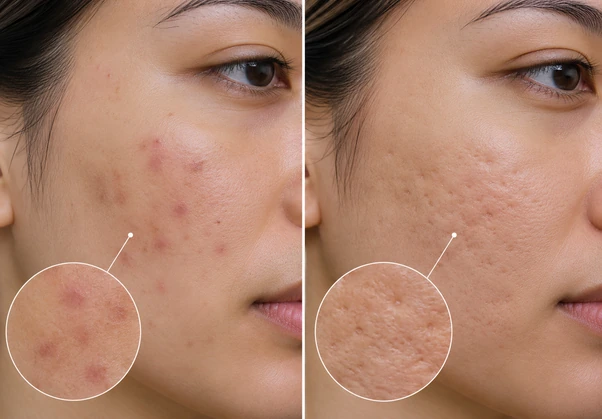
Acne starts when pores become blocked with oil and dead skin cells. Bacteria on the skin can then multiply, and the skin becomes inflamed, which causes spots. Several things can make acne more likely:
Because causes differ, the same product does not work for everyone. That is why an assessment matters before you start any acne treatment.
At Estelaza Clinic, we assess and treat many types of acne:
After acne settles, some people are left with flat dark or red marks, or with pitted scars. Marks and scars are treated differently from active acne, and we explain the difference in our guide to acne marks vs acne scars.
Your plan is matched to your type of acne, your skin and your medical history. Here are the main options your doctor may discuss with you.
Your doctor looks at your skin type, the kind of acne you have, how long it has lasted, what you have already tried and your medical history. This decides which treatments are safe and likely to help.
Gentle peels with ingredients such as salicylic acid can help unclog pores and reduce oil and some post-acne marks. The strength is chosen for your skin and builds over a series of sessions. See our chemical peel page.
HydraFacial cleanses, extracts and hydrates in one session. For acne-prone skin, boosters with acne-focused ingredients can be added. It is gentle and has little downtime, but it does not treat severe acne on its own.
A deep cleansing facial includes professional extractions to clear blocked pores, with calming steps afterwards. Extractions are done by trained therapists and are not something to try at home.
For moderate or persistent acne, your doctor may recommend prescription skin care or other medical treatment. Tell us about any medicines, pregnancy plans or previous acne treatments, so your plan is safe for you.
Once breakouts are under control, we can treat leftover marks and scars with options such as microneedling, laser and peels. Treating scars while acne is still active is usually not advised.

What you do at home can make acne treatment work better. Our doctors often suggest the following:
If a product stings, burns or makes your skin much redder, stop it and tell your doctor.
Acne improves gradually. Many people start to see changes after about 4 to 8 weeks of consistent treatment, and a full course can take several months. Skin can sometimes look worse before it improves, and treatment usually continues for a while to keep skin clear. Your doctor will set expectations for your plan and review your progress at follow-up visits.
The cost of acne treatment in Dubai depends on the type of acne, the treatments in your plan and how many sessions you need. At Estelaza Clinic, we explain your price clearly at the consultation, before treatment starts. Ask our team about current offers, or book a consultation for a quote.

Estelaza Clinic is in Nibras Oasis 2, Dubai Silicon Oasis. Your acne treatment is planned by DHA-licensed doctors, including Dr. Nouf Al Raeesi, Dr. Hala Bchara and Dr. Bayan Al Amine, with skin treatments carried out by trained therapists. See our dermatologist page and our aesthetic clinic in Dubai Silicon Oasis page for more.
Book an assessment if your acne is painful, deep or spreading, is leaving marks or scars, has not improved with over-the-counter products after a couple of months, affects your confidence, or started suddenly as an adult. Sudden or severe acne can sometimes be linked to hormones or medicines, and it is worth having checked.
At your visit, we ask about your acne history, products, medicines and lifestyle, then examine your skin. We explain what type of acne you have, which treatments may help, how many sessions you may need, what to expect and the cost. If another type of treatment suits you better, we will say so.
Heat, humidity and sweat can make oily and acne-prone skin harder to manage in Dubai, while strong air conditioning can dry the skin and weaken its barrier. Dry, irritated skin can produce more oil and more breakouts. Your doctor will balance clearing pores with protecting the skin barrier, and advise on sun protection, which matters even more once acne marks appear.
Tell your doctor if you take or have recently taken isotretinoin (Roaccutane), antibiotics, hormonal treatments or blood-thinning medicines, or if you are pregnant or breastfeeding or planning pregnancy. These can change which peels, lasers and other treatments are safe for you and when you can have them.
Acne is not only a teenage problem. Many adults, especially women, have breakouts around the jawline and chin, and men may have oily, acne-prone skin. We tailor the plan to your age, skin type, hormones and lifestyle. Teenagers should come with a parent or guardian.
When breakouts are controlled, we can focus on any marks left behind. Flat dark or red marks often fade with time, sun protection and treatments such as peels, while pitted scars usually need procedures such as microneedling or laser. See our acne scar removal, scar treatment and hyperpigmentation treatment pages.
A chemical peel works by exfoliating and unclogging pores, and it is often chosen for persistent breakouts, oiliness and marks. HydraFacial is gentler, with little downtime, and is useful for congested, dull skin and as a maintenance treatment. A deep cleansing facial focuses on professional extractions of blocked pores. Your doctor or skin therapist will recommend one, or a combination, based on your skin, and may change the plan as your acne improves.
The best way to avoid marks and scars is to treat acne early and not pick at spots. Daily sun protection also helps, because sun exposure can make red and brown marks last longer. If you already have deeper acne, such as nodules or cysts, see a doctor early, because these are more likely to scar.
At Estelaza Clinic, we answer all of these at your consultation, so you can decide with confidence. See our open pores treatment page too if enlarged pores are a concern.
Ready to start your acne treatment in Dubai? Book a consultation at Estelaza Clinic, Dubai Silicon Oasis. Our doctors will assess your skin and recommend a personalized plan.

Many people see improvement after about 4 to 8 weeks of consistent treatment, and a full course can take several months. Results vary from person to person.
Facials such as HydraFacial or a deep cleansing facial can help clear pores and keep skin calm, but they do not cure acne on their own. Most plans combine facials or peels with a home routine and, when needed, medical treatment.
Sometimes. Some treatments can cause temporary dryness, redness, peeling or a short flare of breakouts as your skin adjusts. Your doctor will explain what to expect and how to manage it.
Light peels with ingredients such as salicylic acid can help unclog pores and reduce oil and some marks. The type and strength depend on your skin, and peels are not suitable for everyone, for example if you recently took isotretinoin. See our chemical peel page.
Some acne medicines and treatments are not recommended during pregnancy or breastfeeding. Tell your doctor if you are pregnant or planning pregnancy, so they can choose safe options.
Hormonal acne is linked to hormone changes and often appears along the jawline and chin in adults, especially women. It can need an assessment, and sometimes blood tests, as part of the treatment plan.
Active acne means current spots and inflammation. Acne marks are flat red or brown discolouration after spots, and acne scars are changes in the skin surface, such as pits. They are treated differently. See our acne scar removal page.
The price depends on the type of acne, the treatments and the number of sessions. We confirm your price at your consultation, before treatment starts.
Usually yes, with oil-free, non-comedogenic products, but after some treatments such as peels you may need to wait. Your doctor will advise you after each treatment.
At Estelaza Clinic in Nibras Oasis 2, Dubai Silicon Oasis. Book online or on WhatsApp.
Your experiences mean the world to us! At Estelaza Clinic, we love hearing how our treatments make a positive difference in your life. Every review helps us grow, improve, and keep delivering the care you deserve. Thank you for trusting us on your beauty and wellness journey.
EXCELLENTTrustindex verifies that the original source of the review is Google. مكان جدا رائع وخدمه ممتاز شكرا للكادر الطبي والدكتورة ميرل عنجد شغل يجنن مبسوط كتير با النتيجهPosted on GoogleTrustindex verifies that the original source of the review is Google. Dr nouf is the best love her honestly and the staff very friendly and helpfulPosted on GoogleTrustindex verifies that the original source of the review is Google. Lovely stuff and doctor I’m happy with my resultsPosted on GoogleTrustindex verifies that the original source of the review is Google. I had fantastic experience in Estelaza clinic. Staff is very professional and welcoming. Dr Nouf has the most gentle hands. She did a magic contouring my face: (chin, cheeks, jaws) and gave super natural volume to my lips. I feel 10 years younger and super glowy and fresh. Can’t wait to be back after the summer. Thank youPosted on GoogleTrustindex verifies that the original source of the review is Google. كانت تجربتي في العيادة مميزة للغاية، حيث يتميز الطاقم بالرحابة وحسن التعامل، والمواعيد مرنة ومنظمة. كما أن الدكتورة نوف محترفة وهادئة في إجراءاتها التجميلية غير الجراحية. أنصح بشدة بزيارة العيادة، فهي تستحق الثقة والتجربة. 🤍

Searching for an aesthetic clinic near me in Dubai can…
Melasma is one of the most common and frustrating skin…

Winter skin treatments in Dubai are popular from November to…

Saturday to Thursday: 10:00 to 19:00
Friday: 14:00 to 21:00
© Copyright 2026 by
WhatsApp us