
© Copyright 2026 by
9
November
Aesthetic Clinic Near Me: How to Choose the Right One in Dubai
Searching for an aesthetic clinic near me in Dubai can…
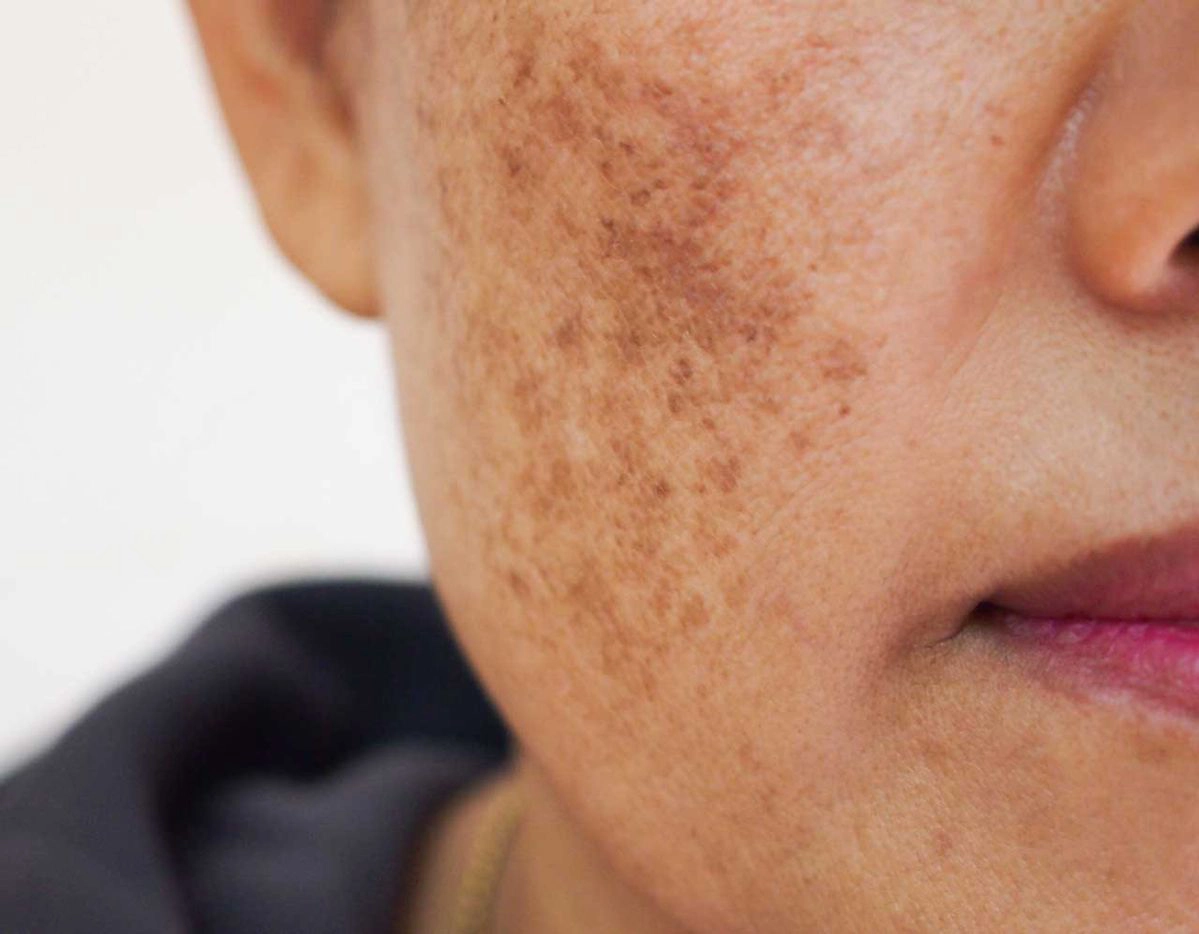
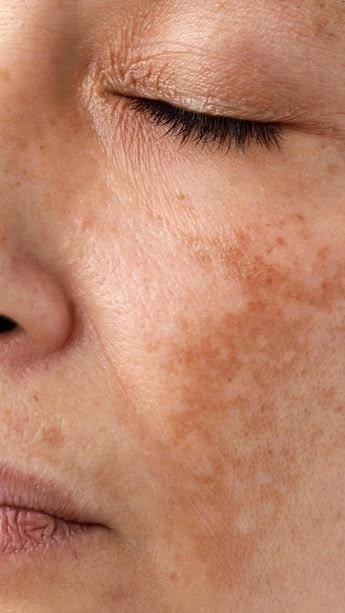
Hyperpigmentation is one of the most common and persistent skin concerns seen in Dubai — and one of the most frequently undertreated, because the wrong approach can make it significantly worse.
Looking for hyperpigmentation treatment in Dubai? Hyperpigmentation means patches of skin that look darker than the rest, caused by sun, inflammation after acne or injury, hormones or some medicines. At Estelaza Clinic in Dubai Silicon Oasis, our DHA-licensed doctors identify the cause first, then plan hyperpigmentation treatment that may include peels, lasers, microneedling and home care, with daily sunscreen as the foundation. See our pigmentation treatments, melasma treatment and chemical peel pages, or book a consultation.
The exact cause is not fully understood, but skin tags are strongly associated with:
The triggers vary widely, and identifying the correct cause is the foundation of effective treatment:
Accurate classification of your pigmentation type determines which treatments are appropriate, which to avoid, and what timeline of improvement to expect.
Melanin excess located in the upper layers of the skin (epidermis). Generally more responsive to topical treatments, chemical peels, and light-based therapies. Appears brown in natural light.
Melanin deposited in the deeper dermal layer — often a result of post-inflammatory pigmentation that has migrated deeper over time. More resistant to treatment, appears blue-grey in natural light, and requires a more sustained approach.
Both epidermal and dermal components present simultaneously — common in melasma and in patients who have had long-standing pigmentation without treatment. Requires a combination strategy addressing both skin layers.
Dark marks left after acne, eczema, injuries, or cosmetic procedures — particularly prevalent and more severe in Fitzpatrick III–VI skin tones. PIH is one of the most common concerns we treat across Dubai's diverse patient population.
Our hyperpigmentation treatment programme is clinically suited for:
Your treating doctor will recommend the most appropriate protocol — or combination — based on your pigmentation type, skin tone, Fitzpatrick classification, and lifestyle. In Dubai's sun-intensive environment, the wrong treatment applied without proper patient assessment can worsen pigmentation — which is why every protocol at Estelaza Clinic begins with diagnosis.
A cornerstone of hyperpigmentation management. Prescription-strength brightening agents — including azelaic acid, kojic acid, tranexamic acid, retinoids, and niacinamide — are prescribed in a structured skincare plan. These formulations are not available over the counter and are calibrated to your skin tone and pigmentation depth. Topical therapy is essential both as a standalone treatment and as the foundation supporting all in-clinic procedures.
Controlled exfoliation using AHA, TCA, mandelic acid, or lactic acid to remove pigmented surface cells, accelerate cell turnover, and reduce melanin concentration in the epidermis. Chemical peels are one of the most effective and evidence-based approaches for epidermal hyperpigmentation. Peel depth, acid type, and concentration are carefully selected for each patient's skin tone — with particular attention to avoiding PIH in darker skin types.
The Q-switched Nd:YAG laser selectively targets melanin without damaging surrounding tissue — breaking down pigment clusters that are then cleared by the body's immune system. Laser toning is well-established for sun-induced pigmentation, age spots, and superficial melasma. The laser settings at Estelaza Clinic are calibrated for the medium-to-dark skin tones prevalent across the UAE, reducing the risk of post-treatment PIH that can occur with incorrectly calibrated laser energy.
A medically guided facial combining vitamin C, kojic acid, glutathione, and niacinamide actives to suppress melanin synthesis, improve radiance, and progressively even out skin tone. An excellent complementary treatment between laser or peel sessions, and a strong standalone option for mild-to-moderate pigmentation. little to no downtime.
Tranexamic acid — a highly effective melanin-suppressing agent with a strong clinical evidence base for melasma — is delivered via micro-injections directly into the pigmented tissue, achieving a concentration and depth of action not possible with topical application alone. Particularly effective for stubborn melasma and dermal pigmentation.
A potent antioxidant that inhibits tyrosinase enzyme activity — the key enzyme driving melanin production — glutathione delivered intravenously or topically produces a systemic brightening and pigmentation-regulating effect. Used as part of a structured programme for patients with widespread or generalised hyperpigmentation.
A structured multi-session plan combining two or more modalities — for example, laser toning with chemical peels, or mesotherapy with a medical topical programme — for resistant or complex hyperpigmentation. This is the most effective approach for melasma, deep dermal pigmentation, and patients who have tried single-modality treatments without adequate results.
Step 1 — Medical Consultation and Skin Analysis
A DHA-licensed doctor conducts a detailed assessment of your pigmentation — using dermatoscopy and Wood’s lamp examination where appropriate to determine pigment depth (epidermal vs. dermal), identify the likely cause, and assess your Fitzpatrick skin type. Accurate diagnosis at this stage is what separates effective treatment from approaches that may worsen the condition.
Step 2 — Treatment Planning
A personalised treatment plan is designed, specifying the modalities selected, their sequence, session spacing, and the medical skincare programme to support in-clinic treatment. Sun avoidance and SPF guidance are established from day one — without consistent sun protection, all hyperpigmentation treatments produce diminished results.
Step 3 — In-Clinic Treatment
Your selected protocol is performed. Most sessions last 20–60 minutes depending on the modality. Laser toning and brightening facials are comfortable. Chemical peels may produce a brief tingling or warmth during application.
Step 4 — Soothing and SPF Protection
A calming serum and broad-spectrum SPF 50+ are applied at the end of every session. In Dubai’s UV environment, this is a non-negotiable final step of every treatment appointment.
Step 5 — Follow-Up and Ongoing Management
Pigmentation — particularly melasma — is a chronic condition requiring long-term management, not a one-off fix. We review your progress at each follow-up, adjust the protocol as your skin responds, and design a maintenance plan to preserve your results against Dubai’s ongoing UV exposure.
Concern / Condition | Suitability |
Post-acne dark marks (PIH) | ✔ Excellent candidate |
Sun damage and age spots | ✔ Excellent candidate |
Uneven skin tone and dullness | ✔ Excellent candidate |
Melasma (hormonal pigmentation) | ✔ Good candidate — requires specific protocols and realistic expectations |
Freckles and sunspots | ✔ Excellent candidate |
Dermal or mixed pigmentation | ✔ Good candidate — combination programme recommended |
Active acne or open skin lesions | ⚠ Treat acne first — consult doctor |
Pregnant or breastfeeding | ⚠ Certain treatments not advised — consult doctor |
Currently using retinoids or isotretinoin | ⚠ Pause required — inform doctor |
History of keloid scarring | ⚠ Certain modalities require modification — inform doctor |
Very recent sun exposure or active tan | ⚠ Sun avoidance period required before laser treatment — consult doctor |
This is one of the most clinically important aspects of hyperpigmentation management in Dubai. The UAE’s patient population is predominantly made up of medium-to-dark skin tones — Fitzpatrick types III through VI — and many hyperpigmentation treatments that work well for fair skin carry a significant risk of triggering or worsening post-inflammatory hyperpigmentation in darker skin if not properly calibrated.
Aggressive laser settings, high-concentration peels, and certain energy-based devices applied incorrectly to darker skin can leave dark marks far more pronounced than the original pigmentation. At Estelaza Clinic, our doctors are specifically trained and experienced in treating the full spectrum of skin tones found across the South Asian, Arab, African, and mixed heritage communities of Dubai and the broader GCC. Every treatment setting, acid concentration, and topical formulation is selected with your Fitzpatrick type as a primary consideration.
Condition | Key Features | Approach |
Post-inflammatory hyperpigmentation | Dark marks after acne, injury, or inflammation | Brightening actives, peels, laser toning |
Melasma | Symmetrical patches, hormonally driven, UV-worsened | Tranexamic acid, gentle peels, strict SPF — laser used cautiously |
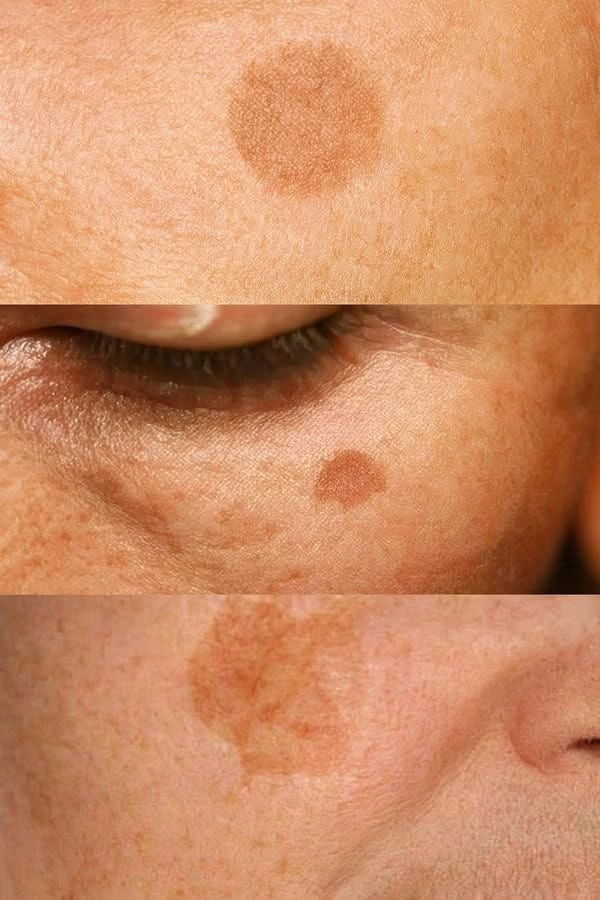
Solar lentigines (age spots) | Well-defined flat patches from cumulative UV | Laser toning, peels, brightening programme |
Freckles | Small, scattered, genetically determined | Laser toning, peels — maintenance required |
Drug-induced pigmentation | History of triggering medication | Medical review first — treat underlying cause |
Dermal melanosis | Blue-grey tone, deep pigment, resistant | Long-term combination programme |
At Estelaza Clinic, every skin growth is assessed by a DHA-licensed doctor before removal. We do not remove skin lesions without clinical examination — your safety depends on getting the diagnosis right first.
Many patients are tempted to remove skin tags at home using scissors, thread, or over-the-counter freezing kits. We strongly advise against this for several reasons:
Dubai presents a near-ideal storm of hyperpigmentation triggers. UV index levels in the UAE rank among the highest in the world for most of the year. Sun exposure begins the moment patients step outside — often without adequate SPF protection — and accumulates rapidly even during brief daily journeys.
The city’s diverse population means that a high proportion of patients have medium-to-dark skin tones that are biologically more prone to reactive pigmentation. Many patients also arrive in Dubai with existing pigmentation that worsens quickly under the UAE sun, or develop new pigmentation within months of relocating.
At Estelaza Clinic in Dubai Silicon Oasis, we understand this environment intimately. Our protocols are built around Dubai’s specific UV reality — every treatment plan includes a dedicated sun protection strategy, and no in-clinic treatment is administered without ensuring the patient has a clear understanding of SPF discipline. Without it, even an advanced in-clinic treatments will fail to deliver lasting results.
We operate under DHA facility licensing, use medical-grade formulations and equipment, and treat all patients under direct physician supervision. Our DSO location is accessible from major Dubai highways with complimentary parking available.
The single most important factor in achieving and maintaining hyperpigmentation treatment results in Dubai is consistent, correct sun protection. Without it, pigmentation will return — often faster than it was cleared.
Hyperpigmentation treatment may suit you if you have dark spots or patches that bother you. Any mark that changes in size, colour or shape, or bleeds, needs a medical check first. Darker skin tones need careful settings to lower the risk of making pigmentation worse.
A typical visit includes:
A visit usually takes about 30 to 60 minutes.
Most plans use a course of several sessions, spaced about two to six weeks apart, with maintenance later. Your doctor will review photos and adjust the plan.
Common effects are redness, dryness, peeling and sensitivity. Less common effects include temporary darkening, infection and, rarely, lasting pigment change.
This treatment is generally avoided during pregnancy, with active infection or open wounds in the area, after a recent tan, after recent isotretinoin use, and with some medical conditions or medicines. Tell your doctor about your full history.
Hyperpigmentation treatment works best when the cause is clear. Before starting hyperpigmentation treatment, your doctor looks at your skin, asks about medicines, hormones and sun habits and chooses hyperpigmentation treatment that suits your skin type.
Many people ask how long hyperpigmentation treatment takes to work. Hyperpigmentation treatment usually needs a course, and results build over weeks to months. Marks that sit deeper in the skin take longer than surface marks.
Home care is part of every hyperpigmentation treatment plan. Sunscreen, gentle skincare and any prescribed products help keep results, and skipping them is a common reason marks return.
At Estelaza Clinic, every hyperpigmentation treatment plan is made by a DHA-licensed doctor in Dubai Silicon Oasis. If you are comparing hyperpigmentation treatment options, ask what type of pigment you have and what the risks are. You can book a consultation to discuss hyperpigmentation treatment for your skin.
The cost depends on the area treated, the number of sessions and your doctor’s plan, and it is confirmed at your consultation. For current offers and prices, see estelazaclinic.com, or book a consultation.
Estelaza Clinic is in Nibras Oasis 2, Dubai Silicon Oasis. Treatments are planned by our DHA-licensed doctors, Dr. Nouf Al Raeesi, Dr. Hala Bchara and Dr. Bayan Al Amine. See our Dubai Silicon Oasis clinic page or book online.
This depends on the type and depth of pigmentation. Epidermal pigmentation — such as post-acne marks and sun spots — typically shows visible improvement after 3–4 sessions over 6–8 weeks. Melasma and dermal pigmentation require a longer and more sustained approach, with meaningful results developing over 3–6 months. Your doctor will set realistic, personalised expectations at your consultation.
Yes — when performed by an experienced clinician using protocols specifically calibrated for darker skin. The key risks in darker skin tones are post-inflammatory hyperpigmentation from overly aggressive treatments and laser-induced PIH from incorrectly set energy parameters. At Estelaza Clinic, all treatments are designed with your Fitzpatrick skin type as a primary variable — choosing the gentlest effective approach and monitoring closely for any early signs of PIH.
Melasma is a chronic, hormonally influenced condition — not a one-time occurrence. It can be significantly reduced and controlled with the right treatment programme and consistent sun protection, but it has a tendency to recur — particularly with sun exposure, hormonal changes, or pregnancy. Long-term management, including maintenance sessions and lifelong SPF discipline, is the realistic framework for sustained control.
Depending on your current routine, your doctor may ask you to pause retinoids, AHAs, vitamin C, or other active ingredients for a period before certain treatments — particularly chemical peels and laser sessions. This reduces the risk of skin sensitivity and unexpected reactions. Bring a list of your current products to your consultation.
After most brightening facials and mesotherapy sessions, makeup can typically be worn within 24 hours. Following laser toning or chemical peels, we recommend waiting 24–48 hours to allow the skin barrier to recover. Mineral-based, fragrance-free formulations are preferred on treated skin. Your doctor will provide specific guidance based on your protocol.
The most common reasons pigmentation returns after treatment are inadequate or inconsistent SPF use, treatment of the wrong pigmentation type with an inappropriate modality, or treatment performed without addressing the underlying hormonal or inflammatory trigger. At Estelaza Clinic, we diagnose before we treat — and we provide a complete aftercare and maintenance plan designed to protect and extend your results.
Pricing depends on the treatment modality, the number of sessions in your plan, and whether a prescribed medical skincare programme is included. We provide transparent, upfront pricing following your consultation. Contact our team or visit Estelaza Clinic in Dubai Silicon Oasis for a personalised skin assessment and quote.
Most people need a course over several weeks to months, and results depend on the cause and depth of the pigment. Your doctor will explain what to expect.
At Estelaza Clinic in Nibras Oasis 2, Dubai Silicon Oasis. Book online or on WhatsApp.
Your experiences mean the world to us! At Estelaza Clinic, we love hearing how our treatments make a positive difference in your life. Every review helps us grow, improve, and keep delivering the care you deserve. Thank you for trusting us on your beauty and wellness journey.
EXCELLENTTrustindex verifies that the original source of the review is Google. مكان جدا رائع وخدمه ممتاز شكرا للكادر الطبي والدكتورة ميرل عنجد شغل يجنن مبسوط كتير با النتيجهPosted on GoogleTrustindex verifies that the original source of the review is Google. Dr nouf is the best love her honestly and the staff very friendly and helpfulPosted on GoogleTrustindex verifies that the original source of the review is Google. Lovely stuff and doctor I’m happy with my resultsPosted on GoogleTrustindex verifies that the original source of the review is Google. I had fantastic experience in Estelaza clinic. Staff is very professional and welcoming. Dr Nouf has the most gentle hands. She did a magic contouring my face: (chin, cheeks, jaws) and gave super natural volume to my lips. I feel 10 years younger and super glowy and fresh. Can’t wait to be back after the summer. Thank youPosted on GoogleTrustindex verifies that the original source of the review is Google. كانت تجربتي في العيادة مميزة للغاية، حيث يتميز الطاقم بالرحابة وحسن التعامل، والمواعيد مرنة ومنظمة. كما أن الدكتورة نوف محترفة وهادئة في إجراءاتها التجميلية غير الجراحية. أنصح بشدة بزيارة العيادة، فهي تستحق الثقة والتجربة. 🤍

Searching for an aesthetic clinic near me in Dubai can…
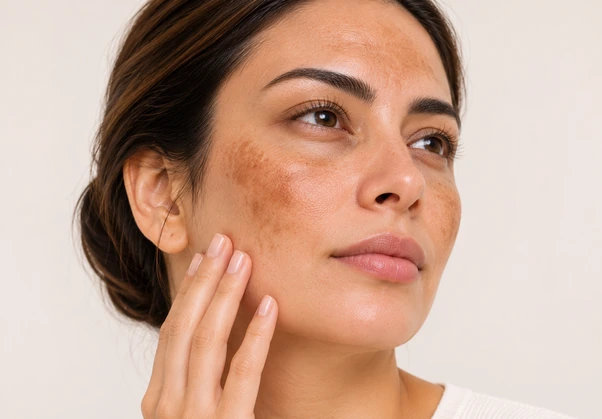
Melasma is one of the most common and frustrating skin…

Winter skin treatments in Dubai are popular from November to…

Saturday to Thursday: 10:00 to 19:00
Friday: 14:00 to 21:00
© Copyright 2026 by
WhatsApp us