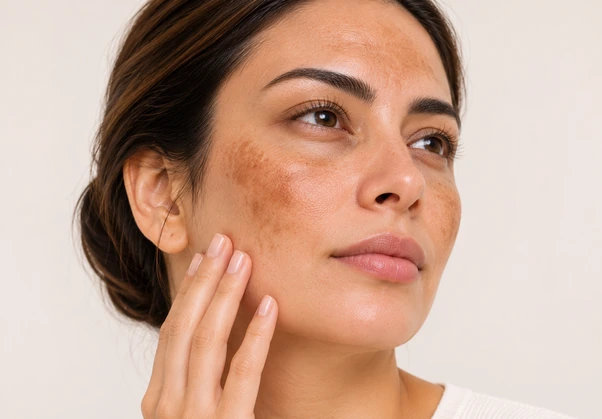
Melasma is one of the most common and frustrating skin concerns in the UAE. It shows up as brown or grey-brown patches, often on the cheeks, forehead and upper lip, and it tends to return. This guide explains why it happens, what helps and what to avoid.
Melasma is a form of pigmentation caused by overactive pigment cells (melanocytes). It usually appears as symmetrical patches on the face. It is more common in women and in medium to deeper skin tones, and it is common in people who live in sunny climates.
What causes melasma?
There is rarely a single cause. Common triggers include:
Sun and UV exposure, including visible light and heat, which is a major factor in Dubai
Hormones: pregnancy, birth control pills or hormone therapy
Genetics: family history raises the risk
Heat and inflammation, such as hot kitchens, saunas or irritating treatments
Some medications and skincare products that make skin sensitive to light
Treatment options
Melasma is usually controlled, not cured. The best results come from combining several steps.
Strict sun protection: a broad-spectrum SPF, ideally tinted for visible light, every day and reapplied. This is the most important step.
Prescription or medical-grade topicals: ingredients such as pigment-regulating agents, azelaic acid, vitamin C and retinoids, chosen by your doctor.
Chemical peels: gentle, superficial peels can help when chosen carefully.
Laser and light treatments: certain low-energy laser settings may help some people. Aggressive treatment can make melasma worse, so the choice of device and settings matters.
Oral treatments in some cases, prescribed and monitored by a doctor.
Microneedling or skin boosters in selected cases, to support skin quality.
What to avoid
Aggressive lasers or strong peels done without an assessment
Unregulated whitening creams, which can contain harmful ingredients
Sun exposure, heat and sunbeds
Picking or scrubbing the area
Why does melasma keep coming back?
The pigment cells stay sensitive to triggers. Even after the patches fade, sun, heat and hormonal changes can bring them back. A maintenance routine, with daily sun protection and periodic treatments, is the best way to keep results.
How long does treatment take?
Improvement is usually gradual, over weeks to months. Your doctor will set expectations after assessing your skin and triggers.
Struggling with stubborn patches? Book a skin assessment at Estelaza Clinic, Dubai Silicon Oasis.
Sometimes it fades after a trigger is removed, such as after pregnancy, but it often persists or returns.
Can melasma be treated on darker skin?
Yes, but it needs a careful, gentle approach with an experienced doctor.
Is laser safe for melasma?
It can help in selected cases, with the right device and settings. It can also worsen melasma if used incorrectly.
Can I treat melasma while pregnant?
Many treatments are avoided in pregnancy and breastfeeding. Speak to your doctor about safe options.
How can I prevent it from getting worse?
Daily sun protection, avoiding heat and following your doctor’s plan.
This article is for informational and educational purposes only. All treatments are performed by DHA-licensed medical professionals at Estelaza Clinic. Individual results vary.